🐾 Cat-lopedia — Everything you ever wanted to know about cats🐾 And several things you probably didn't🐾 Random fact: 🐾 Cat-lopedia — Everything you ever wanted to know about cats🐾 And several things you probably didn't🐾 Random fact:
CAT-LOPEDIA
Section VIII — Decoder

CAT COAT DECODER

Tabby, tortoiseshell, calico, colorpoint, tuxedo, solid, smoke, dilute. Why coat genetics get interesting — and why nearly all calicos are female.

Tabby

Tabby

01

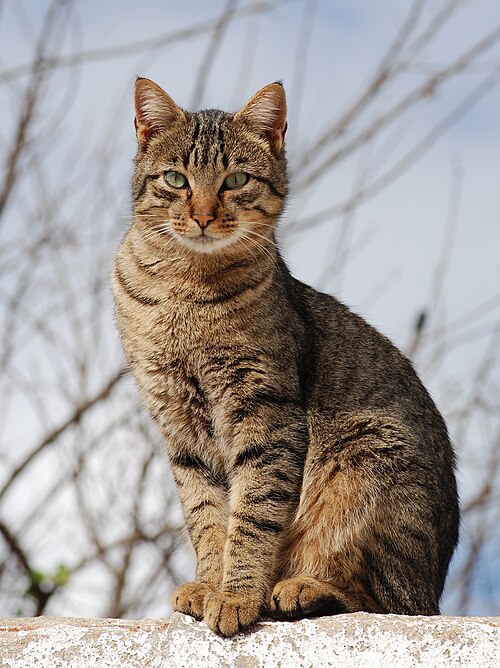
The most common cat coat. Tabbies have distinctive stripes, spots, or swirls, plus an "M" marking on the forehead. There are four classic tabby patterns: mackerel (stripes), classic (swirls), spotted, and ticked (agouti, no obvious stripes).

Genetics

The tabby gene (agouti) is the "default" cat coat pattern — every cat, genetically, is a tabby underneath. Other patterns mask it.
Tortoiseshell ("tortie")

Tortoiseshell ("tortie")

02

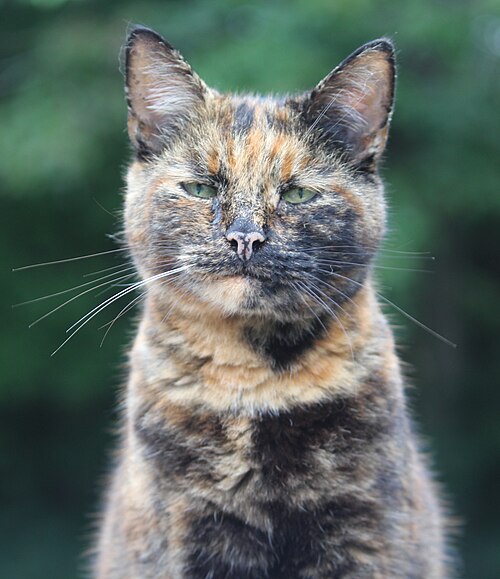
A brindled mix of black and red (or their dilutes: blue and cream) with no white. Almost all tortoiseshells are female — the coat color gene is X-linked, and you usually need two X chromosomes to express both black and red.

Genetics

The O gene (orange) is on the X chromosome. A female cat (XX) can be black on one X and red on the other — producing tortoiseshell. A male (XY) is either/or, so male torties are extremely rare (XXY) and usually sterile.

Calico

Calico

03

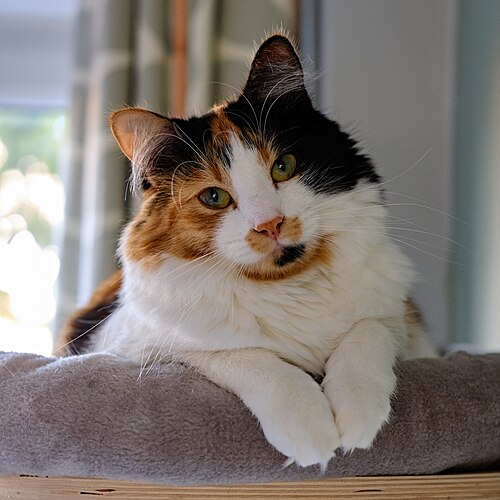
Like tortoiseshell, but with large white patches added to the black-and-red brindling. The white is controlled by a separate spotting gene that "paints over" the colored fur.

Genetics

Calico requires both: (1) the X-linked orange/black mix, and (2) the piebald spotting gene (S) for white. Like torties, calicos are nearly all female.

Colorpoint

Colorpoint

04

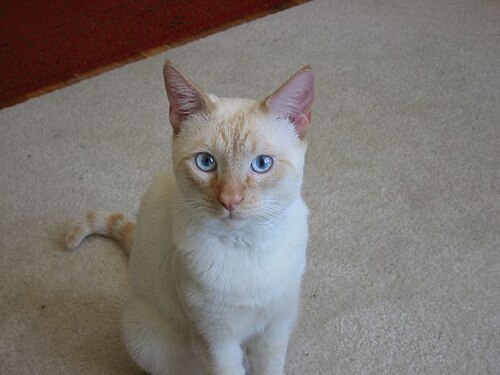
Darker fur on the cooler parts of the body — face, ears, paws, tail — and lighter on the warmer torso. Siamese are the classic example, but many breeds (Ragdoll, Himalayan, Birman) show colorpoint.

Genetics

A temperature-sensitive enzyme (tyrosinase) in the colorpoint gene only works below ~38°C. Cooler body parts → darker fur. This is why colorpoint kittens are born nearly white (warm in the womb) and develop points over weeks.

Tuxedo ("bicolor" / "jellicle")

Tuxedo ("bicolor" / "jellicle")

05

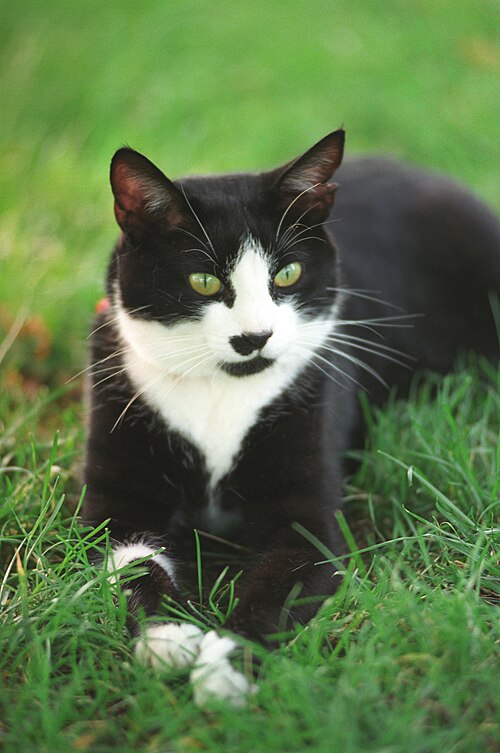
A black cat with a white chest, paws, and belly — looking like a tiny waiter. Tuxedo is one of many "bicolor" patterns; piebald spotting in varying degrees produces everything from a small locket to a nearly-white cat.

Genetics

Caused by the piebald spotting gene (S). The amount of white varies — heterozygous (S/s) cats have less white, homozygous (S/S) have more.

Solid ("self")

Solid ("self")

06

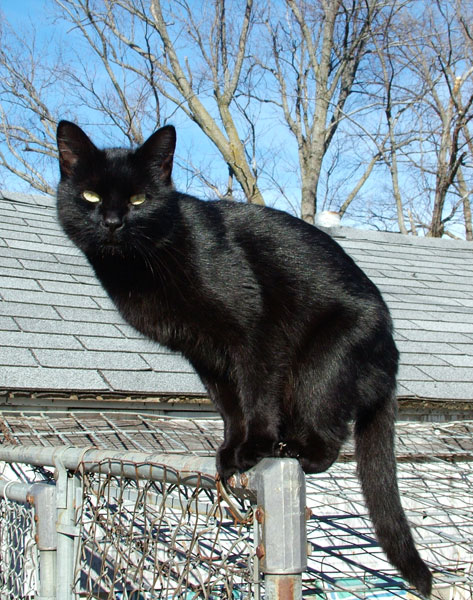
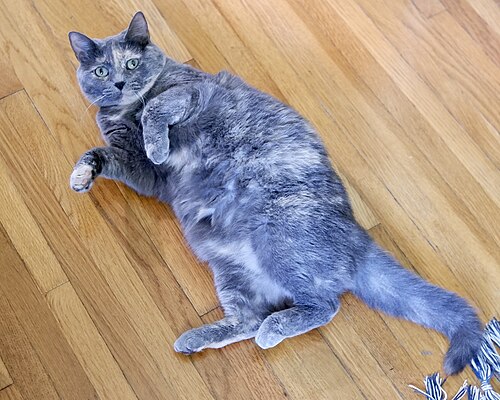
A single uniform color — black, white, blue (gray), chocolate, lilac, red, cream. Solid is less common than tabby; the tabby pattern is masked but genetically still present.

Genetics

The non-agouti (a/a) genotype suppresses the tabby pattern, producing a solid coat. But the underlying tabby pattern is still there — sometimes faint "ghost markings" appear on solid kittens.

Smoke

Smoke

07

A solid-looking cat whose undercoat is white or pale — visible only when the fur moves or parts. Smoke cats look dark at rest but reveal pale roots when stroked.

Genetics

Smoke is an agouti-tabby combination with a silver inhibitor gene (I). The inhibitor suppresses pigment on the hair shaft closest to the skin, leaving a pale undercoat.

Dilute colors

Dilute colors

08

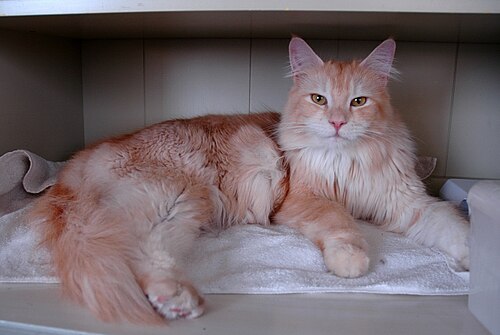
The "softened" versions of standard cat colors: black becomes blue (gray), chocolate becomes lilac, red becomes cream, and cinnamon becomes fawn. Many popular breeds (Russian Blue, Chartreux) are dilute-only.

Genetics

Caused by the recessive dilute gene (d/d). Two copies of d are required — a single d/D produces full color. The gene affects pigment granule shape, scattering light differently.

🐾🐾🐾

Underneath every coat color, every cat is genetically a tabby. Other patterns just hide it. Even a solid black kitten may show faint "ghost" stripes in the right light.